
After
Construction
Cleaning
Checklist
What professional crews do that contractors don't — and why the gap matters before you move in.
Your general contractor handed over the keys. The permit is closed. But if you've walked through a finished Chicago build expecting a clean space and found construction dust on every surface, adhesive on the windows, and grout haze dulling your new tile, you already know: broom clean and move-in ready are not the same thing.
Room-by-Room
Checklist inside →
Room-by-Room: What a Professional Post-Construction Clean Covers
This is the work that separates a professional post-construction crew from a standard cleaning visit. Each item below represents a task that a general contractor's team will not perform as part of their standard scope.
HVAC Vents and Returns
Construction dust is the first thing to address on any post-build job. During framing, drywall, and finish work, fine particulate settles into every supply and return vent in the building. If you run the HVAC system before cleaning those vents, you circulate that dust through every room simultaneously.
A professional crew removes vent covers, vacuums the duct collars as far as the hose reaches, wipes down cover plates, and replaces filters before the system runs. This is not duct cleaning in the mechanical sense -- that's a separate trade service -- but it prevents the most common post-construction air quality complaint homeowners call about.
Windows: Adhesive and Label Removal
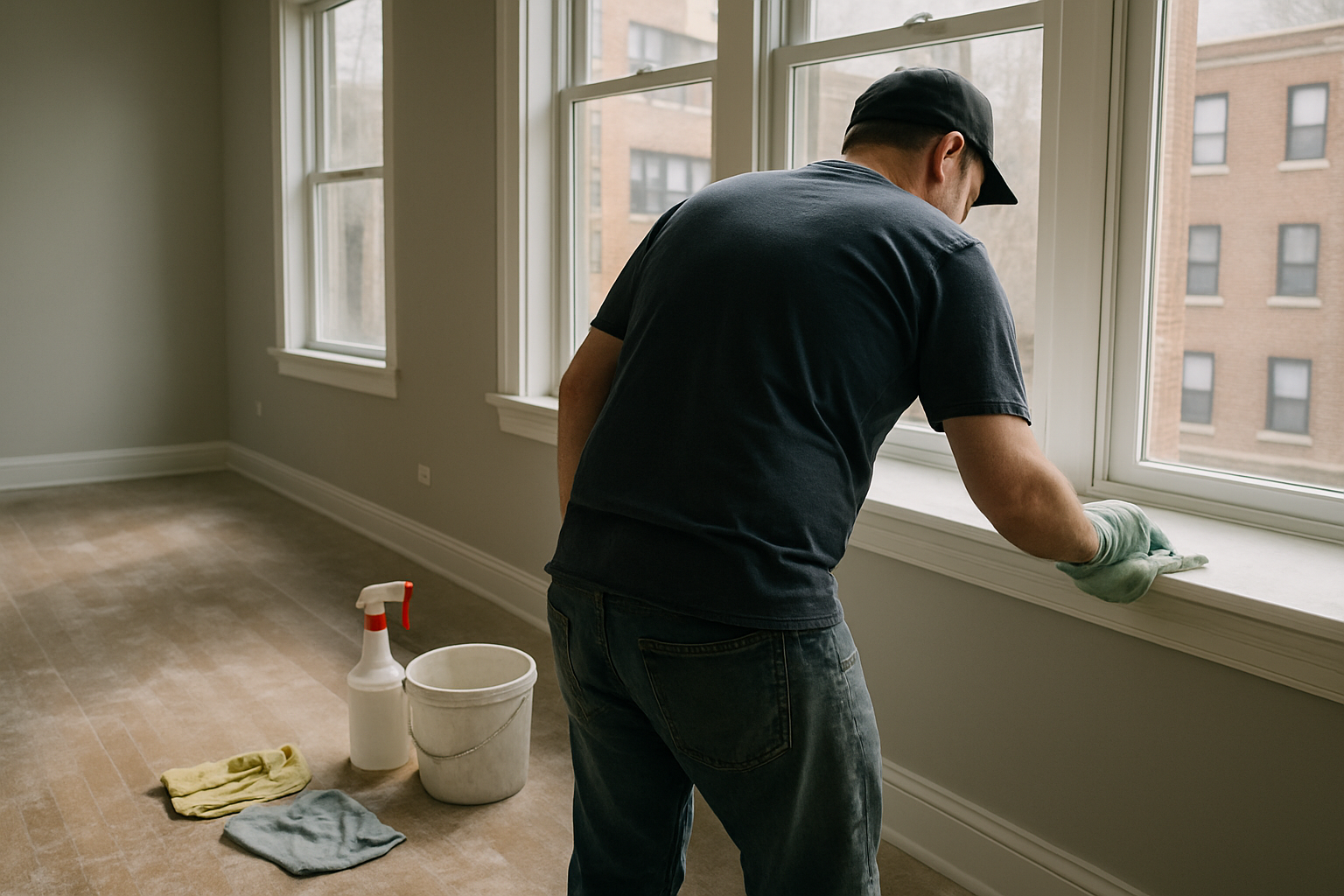
New windows arrive with protective film, stickers, and adhesive labels. Contractors typically score or peel these off quickly, leaving adhesive residue on the glass and frame. That residue does not come off with standard glass cleaner.
Post-construction window cleaning uses a razor blade or plastic scraper on the glass to lift adhesive, followed by a solvent-safe cleaner, then a final polish with a squeegee or lint-free cloth. Frames require a separate wipe-down with a different product because solvents that clean glass can damage vinyl or painted wood.
For a closer look at what interior window cleaning involves, see our guide to premium Chicago window cleaning services.
Tile: Grout Haze
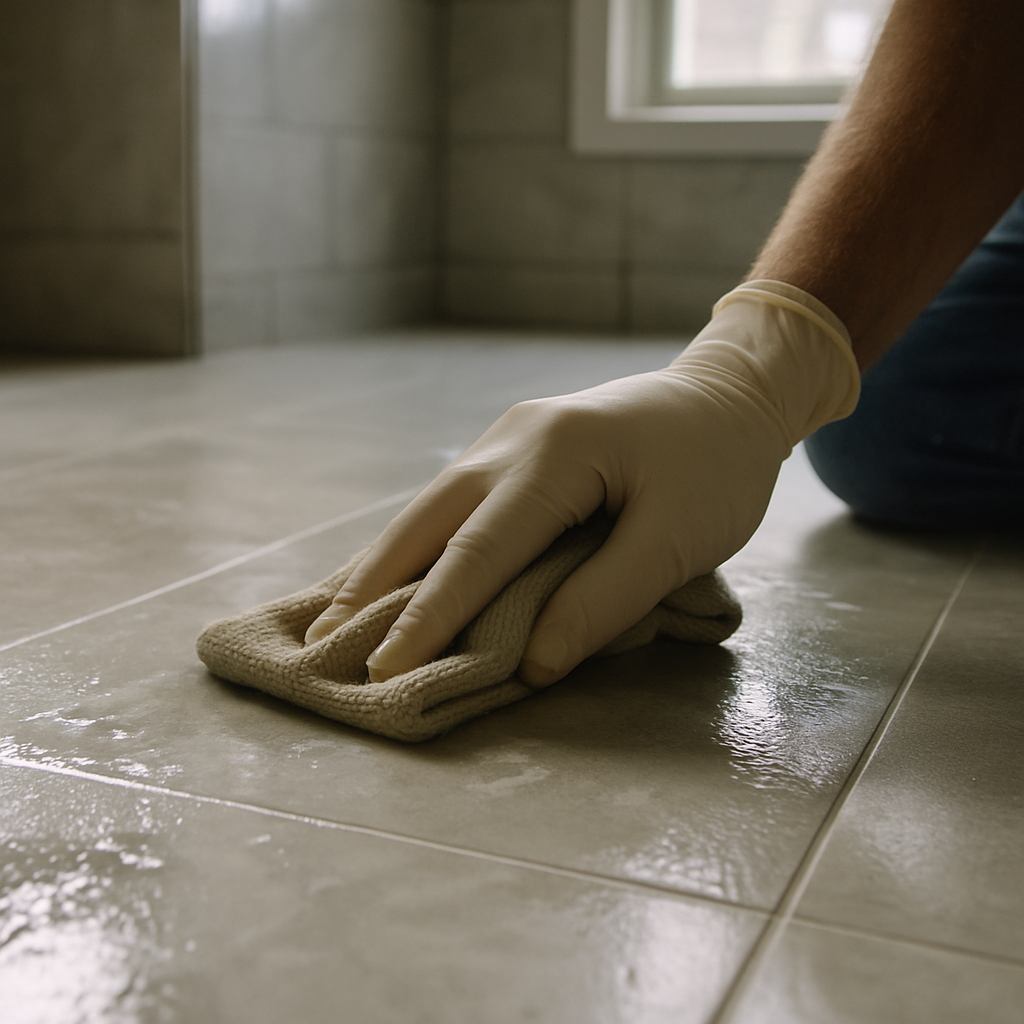
Grout haze is the thin film of grout that dries on tile surfaces after installation. Tile setters wipe it down as they go, but some haze always remains, especially on textured or matte-finish tile where the residue gets into the surface rather than sitting on top.
Cleaning grout haze requires a diluted acidic cleaner -- typically a sulfamic acid solution -- applied carefully to avoid damaging grout joints or stone tile. The product dwell time matters. Apply it too briefly and the haze doesn't lift. Leave it too long on polished stone and you risk etching. This is not a job for general-purpose bathroom cleaner.
Timing also matters: grout haze should be addressed after the grout has fully cured, which is typically 24 to 72 hours depending on the product used and ambient conditions in Chicago. If you're on a tight move-in timeline, confirm cure time with your tile contractor before scheduling cleaning.
Paint Overspray on Fixtures
Painters tape and plastic sheeting catch most overspray, but not all of it. Faucets, cabinet hardware, light fixture trim, and switch plates commonly have fine mist or drips from brush and roller work nearby.
Removing paint from metal fixtures requires knowing the finish -- brushed nickel, oil-rubbed bronze, and chrome each respond differently to cleaning products. Abrasives that work on chrome can strip a brushed finish. Post-construction crews identify fixture finishes before choosing a product, then test on a small area before working across the whole fitting. This step alone prevents a lot of expensive fixture replacements.
Cabinetry Inside and Out
Cabinet interiors collect sawdust and adhesive fumes during installation. Shelves need to be vacuumed and wiped before you store food, dishes, or clothing. Cabinet faces and hardware accumulate fingerprints, pencil marks, and construction adhesive drips that standard cleaning misses.
Hinges and drawer slides should be wiped but not saturated -- excess moisture near hardware causes rust on steel components over Chicago winters. The interior of cabinet doors often has sticker residue from installer labeling that needs to come off before the first use.
Hard Floors and Baseboards
Hardwood and LVP floors installed during construction pick up adhesive, paint, and scuff marks from trades walking through. Caulk lines at baseboards may have smearing. Transition strips between rooms often have adhesive squeeze-out that dried in place.
Post-construction floor cleaning starts with dry extraction -- vacuuming and dry mopping to remove grit that would scratch the surface if pushed around wet -- before any wet cleaning. Baseboards get a detailed wipe that includes the top edge where dust piles up and the caulk line at the floor. This sequence matters. Wet mopping over grit is one of the most common causes of new floor scratches during move-in.
Why Contractors Typically Skip Deep Cleaning
General contractors work from a bid. Every item in their scope was priced and agreed to before ground broke. Deep post-construction cleaning is almost never in that bid because building owners assume it's included, and contractors assume the owner will handle it separately. That gap is where most of the confusion comes from.
Trades also have competing priorities at job end. Electrical and HVAC punch lists, warranty paperwork, city inspection scheduling, and final lien waivers all need attention in the last week of a project. A thorough cleaning requires the space to be completely finished -- all trades out, no more deliveries, no more foot traffic. That timing rarely aligns with the GC's final push before turnover.
Some general contractors do include cleaning in their scope, but it's typically performed by a laborer rather than a trained cleaning crew. The result is usually a step above broom clean: trash removed, some wiping done, but not the detail work listed in this checklist.
If you're working with a property developer on a multi-unit build, this issue compounds. Each unit needs the same level of cleaning, and the timeline for getting a professional crew through multiple floors is worth building into the schedule early. For large commercial builds, the same logic applies -- see our Chicago warehouse cleaning services for how we handle post-construction work at industrial scale.
The simplest protection is to ask your GC directly: "Is post-construction cleaning in your scope?" Get the answer in writing before work starts. If it's not in scope, budget for it separately. Most professional after-construction cleaning in Chicago for a standard single-family home runs several hours and should be priced based on square footage and the specific work involved.
What to ask your GC
- ✓ Is post-construction cleaning explicitly listed in your scope of work?
- ✓ Who performs the cleaning and what does it cover?
- ✓ Will all trades be finished before the cleaning appointment?
- ✓ What day is the Certificate of Occupancy expected?
- ✓ Will the HVAC be operational before or after cleaning?
External Reference
For Chicago permit requirements and building standards, the City of Chicago Department of Buildings publishes the Municipal Code definitions for construction handoff conditions.
For general industry standards, the ISSA (Worldwide Cleaning Industry Association) provides professional cleaning benchmarks used by commercial crews.
How to Time Your Cleaning Relative to the Occupancy Inspection
Chicago's Certificate of Occupancy inspection is a code compliance check. The inspector walks the space to verify that structural, electrical, mechanical, and fire safety systems meet code. They are not evaluating cleanliness, and the inspection result will not change based on whether the floors are scrubbed.
That said, timing matters for a practical reason: trade corrections. If the inspector flags an issue -- a missing smoke detector, an HVAC register not properly seated, a handrail at the wrong height -- a contractor or subcontractor will return to address it. That return visit can kick up dust, leave footprints, and undo work a cleaning crew already completed.
The safest sequence is: inspection first, corrections made, re-inspection if required, then cleaning. For most standard builds in Chicago, the re-inspection happens within a few business days if the initial punch list is short. Build that buffer into your move-in timeline.
For renovation projects that didn't require a new Certificate of Occupancy, the same principle applies: wait until all trades are out and all materials are off-site before scheduling. A painting touch-up after cleaning means the cleaning charge for those surfaces was wasted.
Most professional post-construction cleaning jobs on a 2,000-to-3,000 square foot Chicago home take between four and eight hours with a two-person crew, depending on the scope of finish work and how much construction residue is present. A gut rehab leaves more behind than a kitchen renovation. A new-build with spray-painted walls leaves more overspray than a repaint. The crew lead should walk the space before pricing to give an accurate estimate.
Recommended Sequence
- 1 Final inspection scheduled with the City
- 2 Any corrections made and verified
- 3 Certificate of Occupancy issued
- 4 Professional cleaning crew scheduled (1-2 days after)
- 5 Move-in or tenant occupancy
Typical Job Duration
A 2,000-to-3,000 sq ft Chicago home: 4 to 8 hours with a two-person crew. Gut rehabs run longer than kitchen remodels. Always request a walk-through estimate.
Related Reading
Premium Deep Cleaning Services in Chicago →When post-construction is done, this is what a deep clean looks like for ongoing maintenance.
What to Check Before the Cleaning Crew Arrives
The cleaning crew works more efficiently when the space is prepped correctly. A few things to confirm before they arrive:
- ◆ Utilities are live. Running water and electricity are required for post-construction cleaning. A dark space with no water access means the crew cannot complete the job.
- ◆ Construction materials are off-site. Lumber, drywall scraps, buckets, and contractor equipment should be removed. The cleaning crew is not a debris removal service.
- ◆ No trades scheduled same day. Electricians, plumbers, or punch list contractors working while cleaning is underway defeats the purpose.
- ◆ HVAC filter location known. The crew needs to swap filters before running the system. Know where the filter box is and have a replacement filter on-site.
- ◆ New appliances unwrapped or clearly marked. Cleaning crews will clean appliances on-site. If an appliance is still in shipping wrap, let the crew lead know so they can unwrap and clean it properly.
What Happens After the First Clean
Post-construction cleaning is a one-time service. After move-in, construction dust and residue stop being the issue -- regular soil and occupancy-related cleaning take over. Many Chicago homeowners who go through a renovation or new build set up a recurring cleaning schedule in the first few weeks of occupancy, because even after a thorough post-construction clean, fine particulate continues to settle from surfaces and HVAC circulation for two to four weeks.
For those planning a rental or short-term rental after construction, timing the first cleaning is especially important. Occupancy-ready and guest-ready are different standards, and tenants or guests notice construction residue that an owner might overlook.
For ongoing upkeep, our recurring house cleaning Chicago homeowner's guide covers scheduling, frequency, and what to expect from a regular maintenance clean after a major project.
If you've just received keys from your general contractor and are ready to schedule, our team provides professional after-construction cleaning in Chicago with crews trained specifically for post-construction conditions. Walk-through estimates are available before booking.
Questions about what's included in a specific job? Our Chicago cleaning service standards and scope page lays out exactly what each service level covers.