
Post-Construction Cleaning in Chicago: What Contractors Don't Clean
Chicago Post-Construction Cleaning After the Contractor Leaves
Fine dust, adhesive residue, and window film - fully addressed in one visit.
What Post-Construction Cleaning Covers After the Contractor Leaves
Post-construction cleaning is a second-phase service – it starts where the contractor’s crew stops.
A contractor’s final sweep removes visible debris and major waste. It does not address fine drywall dust that has settled inside cabinet interiors. It does not remove adhesive residue left on floors after flooring installation. It does not clean the white haze of construction film off new window glass.
Post-construction cleaning – sometimes called a builder’s clean, meaning the detail clean performed after construction is complete – covers all of that. The scope is specific: HVAC registers, window tracks, cabinet interiors, glass surfaces, and any surface where fine particulate or adhesive material has come to rest after the contractor’s crew has left.
Shine Up handles post-construction and post-renovation cleaning for Chicago residential and commercial spaces. That includes gut-rehab units – a full interior renovation typically down to the studs – and high-rise buildouts. We work within a 6-10 mile radius of ZIP 60661, available seven days a week.
The Residue a Contractor's
Final Sweep Doesn't Reach
Every post-construction clean has the same three problem areas. Every single time.
Seven years of this work in Chicago produces a predictable pattern. A unit gets handed over as finished. The floors look clean. The walls are painted. The new cabinets are installed. Then a cabinet drawer gets opened — and there’s a quarter-inch of fine white drywall dust coating the interior. The HVAC register gets checked — packed with construction particulate that will start recirculating the day someone turns on the heat.
HVAC Dust Migration
When a heating or cooling system runs in a recently renovated unit, any construction dust in the ductwork begins cycling through the air. A new resident moves in, turns on the heat for the first time in November, and within 24 hours there’s a fine white film on every horizontal surface. That’s residue left behind before they arrived — not a problem they created.
Window Film Adhesive Residue
New windows get protective plastic sheeting during construction. When the sheeting comes off, it leaves an adhesive border along the edges of the glass — sometimes a full half-inch wide. That adhesive doesn’t wipe off with standard glass cleaner. It requires the right product and technique, or it smears across the pane.
Construction Adhesive Residue
The sticky material left on floors, walls, or glass after flooring installation and caulking. On hardwood floors, this is common near baseboards and around thresholds. It needs specific agents and careful technique to remove without damaging the finished surface.
These three items — HVAC dust, window film adhesive, and floor and surface adhesive residue — are the consistent gap between what a construction crew leaves and what a space needs to be genuinely move-in ready.
⚠ One Important Note on Scope
Shine Up’s post-construction cleaning does not include debris or junk removal. We handle interior surface cleaning after major debris has been cleared. If construction debris is still on site, that requires a separate arrangement.
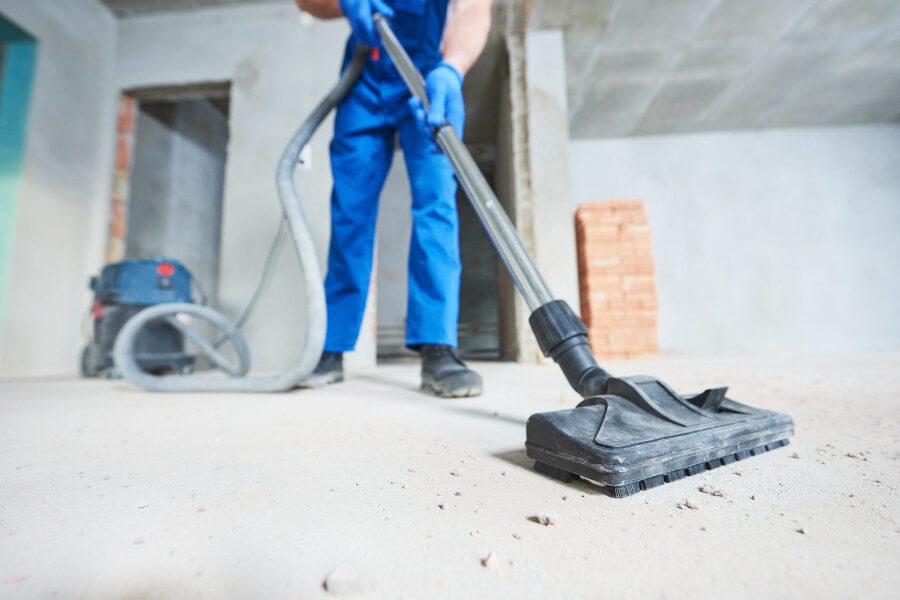
Move In Without Finding Construction Residue a Week Later
The detail clean should happen before occupancy — not after the first week reveals what was missed.
The most common situation before a booking goes like this: the renovation is complete, the unit looks finished, and then move-in day reveals a fine white dust coating every horizontal surface. That’s drywall compound. It settles after the work is done. It’s fine enough to pass through a standard broom sweep and light enough to resettle after a surface wipe.
Here’s how we handle it. Before starting, we identify every surface where post-construction dust migration is likely — registers, cabinet interiors, window tracks, and any horizontal ledge near a drywall joint. This is not a standard residential clean applied to a construction site. It’s a different scope, mapped specifically to what Chicago renovation projects leave behind.
If the project involved new flooring, we identify adhesive residue locations before touching those surfaces. Wrong technique on fresh hardwood causes damage. Shine Up has been removing construction adhesive from Chicago residential floors for seven years. We know which product works on which substrate, and which approach to avoid.
The result is a space that’s genuinely move-in ready — not one that looks clean until someone opens a kitchen cabinet.
How We Approach the Second-Phase Detail Clean
Shine Up’s post-construction cleaning follows a defined second-phase scope — not a general clean applied to a dusty space.
What separates a post-construction detail clean from a standard residential clean is sequence and specificity. We work top-down, starting with HVAC registers before floor work begins, so particulate dislodged from vents doesn’t recoat surfaces already cleaned. Every step in the sequence is deliberate.
Our post-construction cleaning standards include:
✗ What Falls Outside Our Scope
Debris and junk removal, crime scene cleaning, and units where major construction waste has not been cleared prior to arrival.
The first pass removes bulk particulate. The second addresses adhesive and residue. The third confirms finish quality.
That three-pass mindset is what separates a post-construction detail clean from a surface wipe.
Room-by-Room Post-Construction Cleaning Tasks We Complete
Chicago renovation projects produce room-specific residue patterns. We address each room on its own terms.
Diagnostics
Before touching anything, we do a full walkthrough. We identify which surfaces carry fine drywall dust, where adhesive residue is present, what type of flooring is installed, and whether HVAC registers show particulate buildup. In Chicago gut-rehab units, dust migration into rooms outside the renovation footprint is common — particulate travels through HVAC systems and under doors.
This walkthrough takes 10–15 minutes. It determines which products come in first, where we start, and what sequence we follow. A high-rise unit with new hardwood and existing HVAC gets a different sequence than a gut-rehab vintage unit with new tile and new windows throughout.
Post-Service Testing
Before leaving, we open every cabinet cleaned. We run a hand along every window track. We check HVAC registers. We inspect glass for adhesive residue at edges.
In post-construction environments, surface conditions aren’t always visible until touched — this final check is where a first pass gets confirmed or corrected.
Implementation
Kitchen
Cabinet interiors, drawer interiors, cabinet exteriors, countertops, appliance surfaces, sink and fixture cleaning. Adhesive residue on floor near threshold and toe kicks addressed. Grout cleaned on new tile if installed during renovation.
Bathrooms
New tile grout cleaned and residue-free. Fixture surfaces cleaned of drywall compound. Glass shower enclosures treated for construction film if new installation. Cabinet interiors and mirror cleaning included.
Living Areas & Bedrooms
All horizontal surfaces cleaned top-down. Window glass, frame, sill, and track. Baseboards and floor-wall junctions cleaned. HVAC registers addressed. New flooring cleaned using substrate-appropriate method — hardwood, tile, and luxury vinyl each require a different approach.
Windows Throughout
Glass cleaned for construction film and adhesive residue. Frames cleaned. Sills cleared of debris. Window tracks fully decompacted and wiped.
In Chicago high-rise units, window tracks on upper floors accumulate an elevated level of construction debris — they remain open during the build and collect particulate from multiple trades.
Chicago Building Types and Corridors We Service After Construction
Shine Up handles post-construction cleaning across Chicago’s active renovation corridors and residential building stock.
We serve clients across Chicago’s gut-rehab and buildout market — vintage two-flats and courtyard buildings on the North Side, high-rise residential and commercial units in the Near North Side and West Loop, and coach house renovations throughout the 60661 service radius.
Our service area covers the following neighborhoods within a 6–10 mile radius of ZIP 60661:
Available seven days a week.
Schedule Your Chicago Post-Construction Detail Clean
Book the detail clean as soon as the contractor’s rough sweep is complete — that’s the right point in the construction sequence.
The window between contractor completion and occupancy is when post-construction cleaning delivers the most value. Waiting until move-in day compresses the schedule and increases the chance of occupancy before residue is fully addressed.
Shine Up is available seven days a week, including same-day booking when slots are open. Tell us your building type, unit size, and target completion date. We’ll confirm availability and scope before the crew arrives.