Chicago Short-Term Rental Regulations: What Airbnb Hosts Must Know About Permits and Property Upkeep
How Chicago's Shared Housing Ordinance Applies to Every Airbnb Host in the City Registration is required regardless of how often you rent - here's what that means
What Chicago's Shared Housing Ordinance Requires of Every STR Host
Every Chicago Airbnb host must register their unit before accepting a single booking.
The Chicago Shared Housing Ordinance – the city’s municipal regulation governing short-term rentals – was originally adopted in 2016. It has been amended since. The ordinance requires any host renting a residential unit through Airbnb, VRBO, or any similar platform to complete a Shared Housing Unit registration with the city. That registration is tied to the specific unit address. It is not tied to frequency of rental. Rent your place once a year or every weekend – the requirement applies either way.
Here’s what many hosts overlook: the ordinance doesn’t just apply to full apartment rentals. It covers individual rooms within a unit in some contexts too. The city’s registration process, fees, and renewal requirements are specific to Chicago city limits. They do not apply to Evanston, Oak Park, or other Chicago-area suburbs – and that jurisdictional difference matters if you’ve read a general Airbnb hosting guide that doesn’t distinguish between municipalities.
The Shared Housing Unit registration – the formal city registration process a Chicago host must complete before listing – requires the host to apply through the city’s online portal, pay the applicable registration fee, and post the registration number on the listing. Platforms operating in Chicago are required under city rules to verify that registration number exists before the listing goes live – or to delist unregistered units once identified.

How Chicago's STR Rules Compare to Suburban Cook County
Chicago’s registration requirement has no direct equivalent in suburban Cook County municipalities.
If you’ve hosted in Evanston, Naperville, or another Chicago-area suburb and then moved your listing into Chicago city limits, the rules changed the moment you crossed the municipal boundary. Suburban municipalities in Cook County may have their own ordinances — or none at all — but they are not governed by Chicago’s Shared Housing Ordinance.
This matters because many hosts in neighborhoods like River North, Lakeview, and Lincoln Park started listing before the ordinance was updated and assumed the rules they originally followed were still current. The ordinance update history is real: amendments since 2016 have changed specific requirements around registration, renewal, and platform-operator obligations. A host who registered under the original 2016 framework and hasn’t reviewed the current version may be operating under outdated assumptions.
The platform-operator relationship — the structural arrangement between individual hosts and the booking platforms that facilitate rentals — is also Chicago-specific. Airbnb and VRBO are required under the city’s framework to act as operators, not just neutral marketplaces. That means they carry compliance obligations too. But host registration remains the individual host’s responsibility.
One practical note: Chicago’s STR registration requirement applies specifically to residential units within Chicago city limits. Short-term rentals in unincorporated Cook County fall under a different regulatory framework entirely.
Chicago STR Neighborhoods We Clean for Registered Hosts
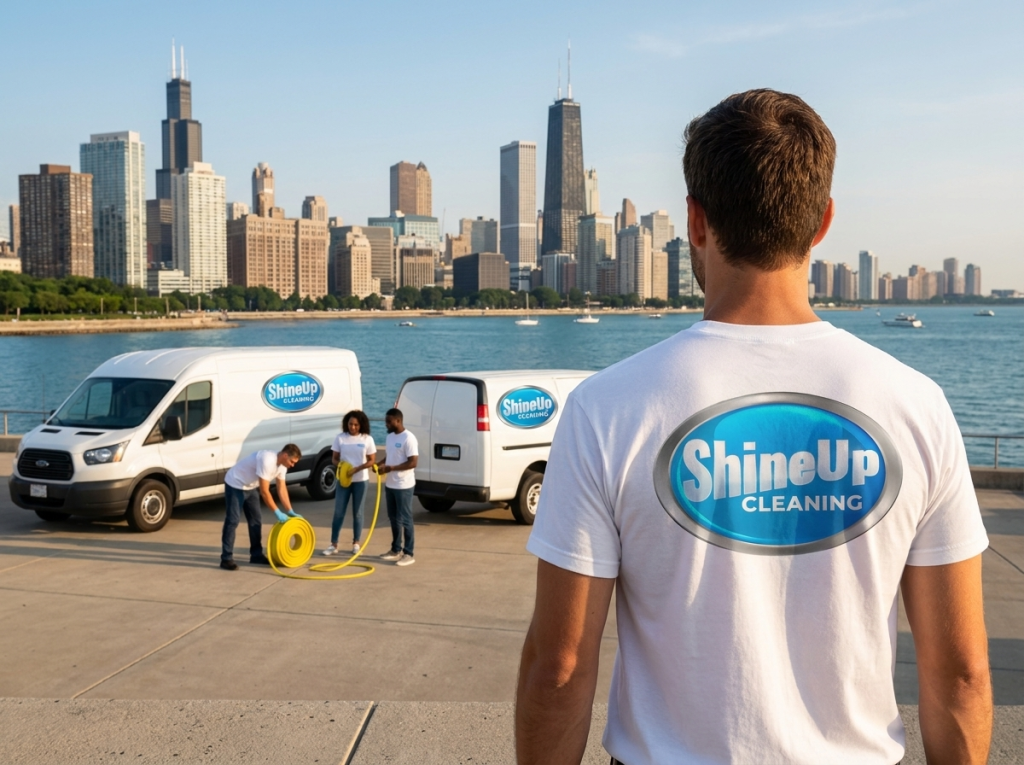
Shine Up serves STR hosts across Chicago’s North Side and Near West corridors.
We clean short-term rental units in the following neighborhoods — all within our 6–10 mile service radius of ZIP 60661:
Please note: We do not serve South Side addresses.
If you’re unsure whether your unit falls within our service area, give us a call — we’ll confirm in one quick conversation.
Connect Property Upkeep to Compliance - Start with a Turnover Clean
A registered Chicago STR listing still needs consistent property condition to stay compliant.
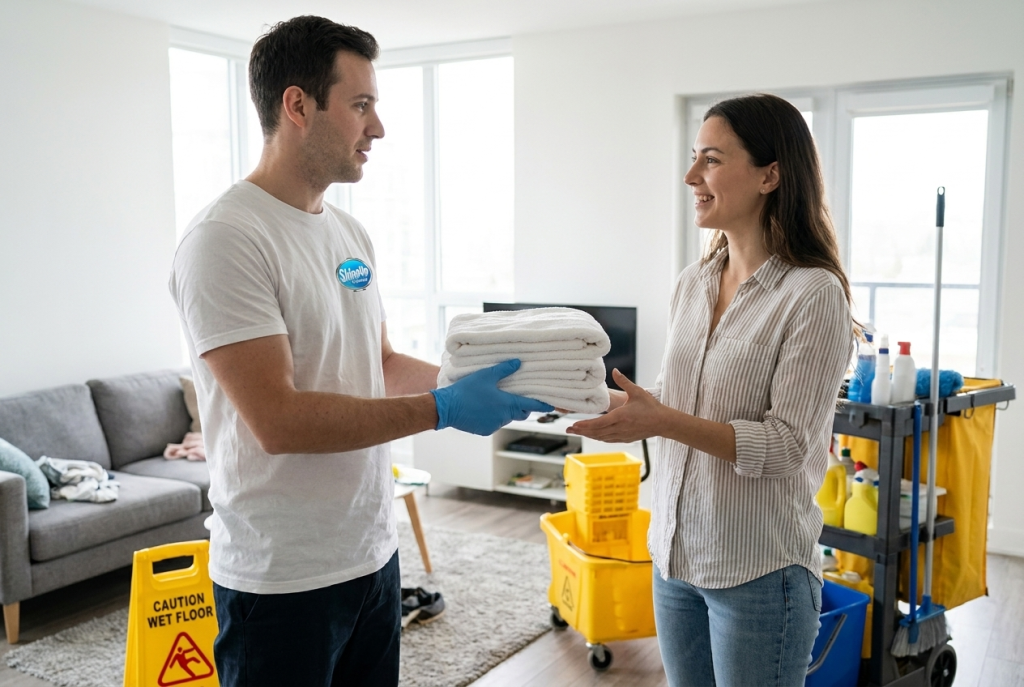
Registration gets your listing live. Consistent turnover cleaning keeps it there. Shine Up cleans Airbnb and VRBO units across Chicago’s North Side seven days a week, with same-day availability when slots are open. We’re available from 9:00 AM to 6:00 PM daily.
To book a turnover clean or ask about recurring STR cleaning schedules, call us or use the contact form on our Airbnb cleaning service page. Tell us your unit address, your typical turnover window, and what the unit needs — we’ll take it from there.